

Published in News
From Sea to Shining Sea: 6 Regional Hotdogs Worth Firing Up This 4th of July
America turns 250 this summer. We’re celebrating the only way we know how, with fire, great food, and a cross-country tour of the hotdog styles that make this country deliciously […]
Jun 17


America turns 250 this summer. We’re celebrating the only way we know how, with fire, great food, and a cross-country tour of the hotdog styles that make this country deliciously hard to summarize.
We could argue all day about what defines American food. BBQ? Sure. Apple pie? Classic. But if there’s one food that genuinely belongs to every corner of this country, one that’s been adapted, argued over, and obsessed about from coast to coast, it’s the humble hotdog.
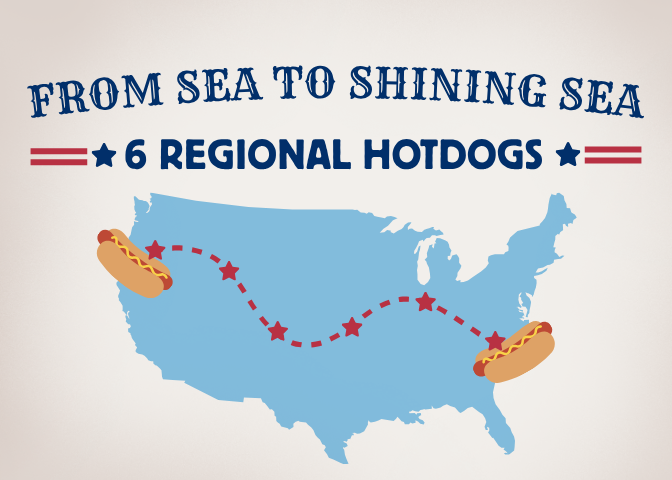
Don’t let the simplicity fool you. Regional hotdog culture in America is serious business. What goes on top (and what absolutely does not) varies wildly depending on where you grew up, and people have strong feelings about it. We’re starting on the Atlantic and ending on the Pacific, with five legendary stops in between.
Fire up the grill. Let’s take the tour.
🗽 The New York Dog — New York City, NY
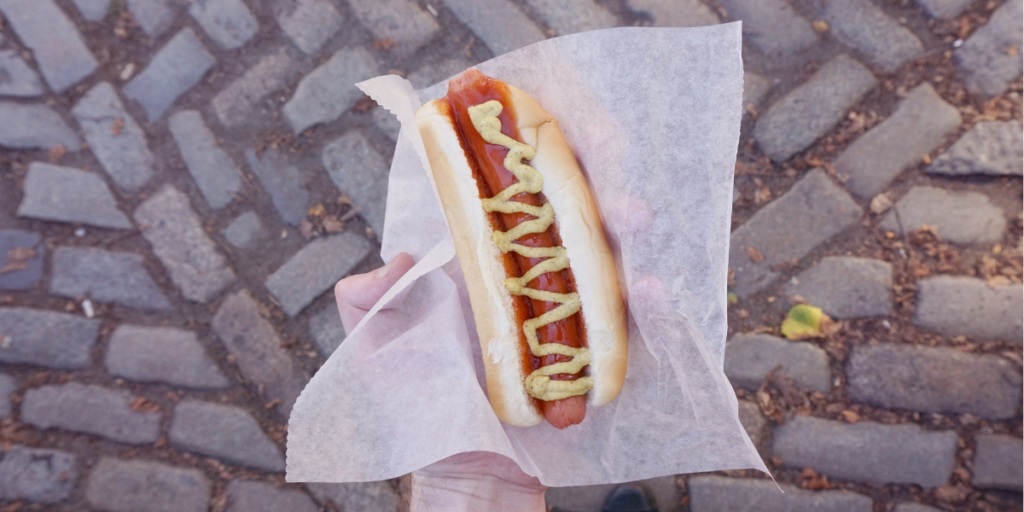
We start where so many American stories start: New York City.
The New York dirty water dog is as old as the city’s immigrant history. German and Austrian immigrants brought their wursts to the Lower East Side in the late 1800s, and street cart vendors, many of them Jewish, working within kosher traditions, helped shape the style into what it is today. By the early 20th century, the hotdog cart was as much a part of the New York streetscape as yellow cabs and brownstones.
The preparation is deceptively simple: an all-beef frank, steamed or simmered in salted water on the cart, nestled into a soft bun that’s been warmed in the steam tray. Yellow mustard goes on top. Brown spicy mustard if you want to get fancy. Sauerkraut is optional but welcome. Ketchup is, famously, not.
It’s a hotdog that’s been perfected by volume, millions of them, served fast, to people who know exactly what they want.
🌭 The Chicago Dog — Chicago, IL
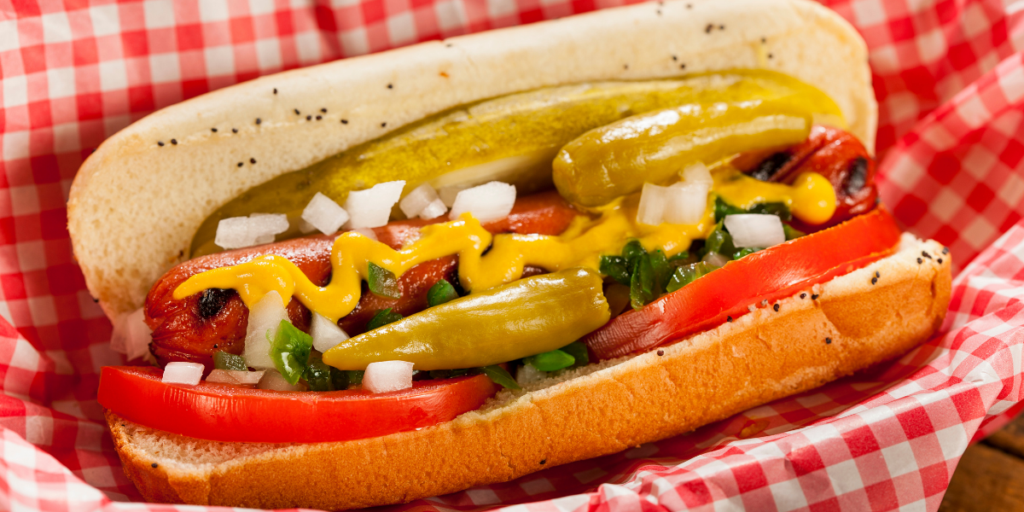
Chicago doesn’t just have an opinion about hotdogs. Chicago has rules.
The Chicago dog emerged during the Great Depression, when vendors at Fluky’s on Maxwell Street started loading up their dogs as an affordable, filling meal. The logic was straightforward: pile on enough fresh toppings and a nickel hotdog becomes a full lunch. The combination that stuck became one of the most iconic in American food culture.
Here’s what goes on a Chicago dog, in order: an all-beef frank in a poppy seed bun, topped with yellow mustard, chopped white onion, bright green sweet pickle relish, a dill pickle spear, tomato slices or wedges, pickled sport peppers, and a dash of celery salt.
What doesn’t go on a Chicago dog? Ketchup. This is not negotiable. Chicagoans will tell you the toppings are so perfectly balanced that ketchup would only muddy them, and after one bite, you’ll understand what they mean. Everything is bright, crisp, tangy, and fresh. It’s a garden on a bun, and it works.
🌵 The Sonoran Dog — Tucson & Phoenix, AZ
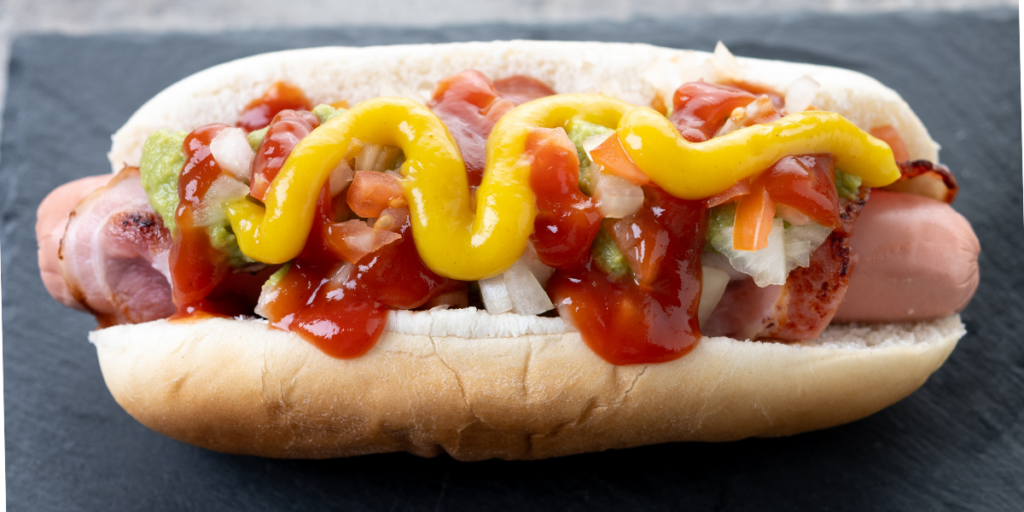
Cross into the Southwest and the hotdog transforms entirely.
The Sonoran dog was born along the US-Mexico border, almost certainly in the Sonora state of Mexico before making its way north to Tucson and Phoenix in the 1980s and 90s. It’s the most architecturally ambitious dog on this list, and it earns every layer.
Start with a beef frank wrapped in bacon and grilled until the bacon crisps and the whole thing develops a slightly caramelized, smoky exterior. It goes into a bolillo-style bun, softer and slightly sweet, more like a Mexican bread roll than a standard hot dog bun. Then comes the build: pinto beans, diced fresh tomatoes, shredded cheese, mayonnaise or crema, mustard, and green tomatillo salsa. Some versions add jalapeños or avocado.
It sounds like a lot. It is a lot. It’s also completely delicious, a cross-cultural creation that couldn’t exist anywhere but the borderlands.
🍖 The Carolina Slaw Dog — Western NC & Upstate SC
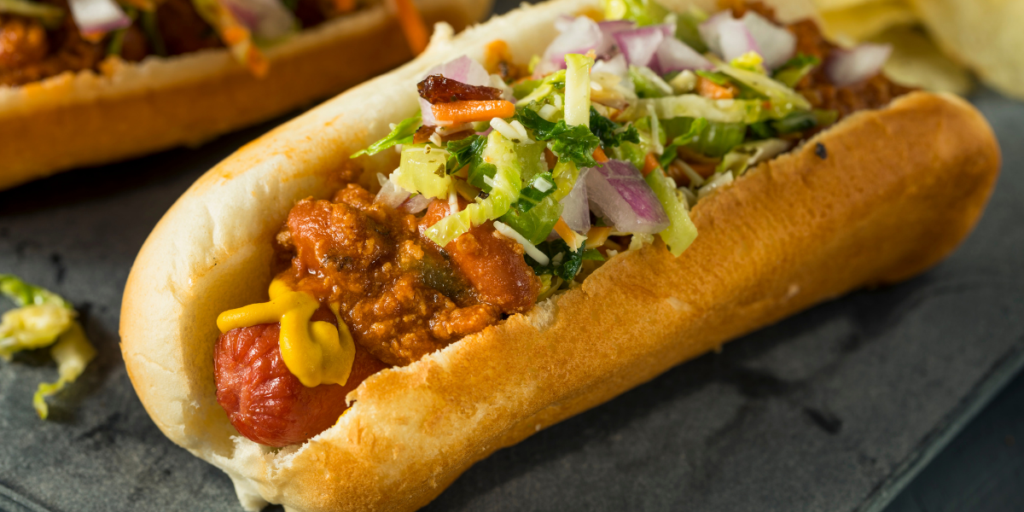
Head southeast and the hotdog gets tangy, smoky, and slaw-forward.
The Carolina slaw dog is rooted in the textile mill towns of western North Carolina and upstate South Carolina, where mill workers needed a quick, filling lunch. Roadside stands and small diners developed their own hotdog traditions, and the slaw dog became the signature.
The dog itself is typically a chili-topped frank — a loose, finely ground beef chili with no beans — finished with a generous heap of creamy coleslaw. Some versions add mustard and onion underneath. The combination of the warm, savory chili and the cool, tangy slaw is the whole point: it’s a contrast that works on every level, and once you’ve had it done right, a plain hotdog feels like it’s missing something.
Regional pride here runs deep. Ask a local which stand has the best slaw dog and be prepared to stay a while.
→ Get the Carolina Slaw Dog recipe
🏭 The Detroit Coney Dog — Detroit, MI
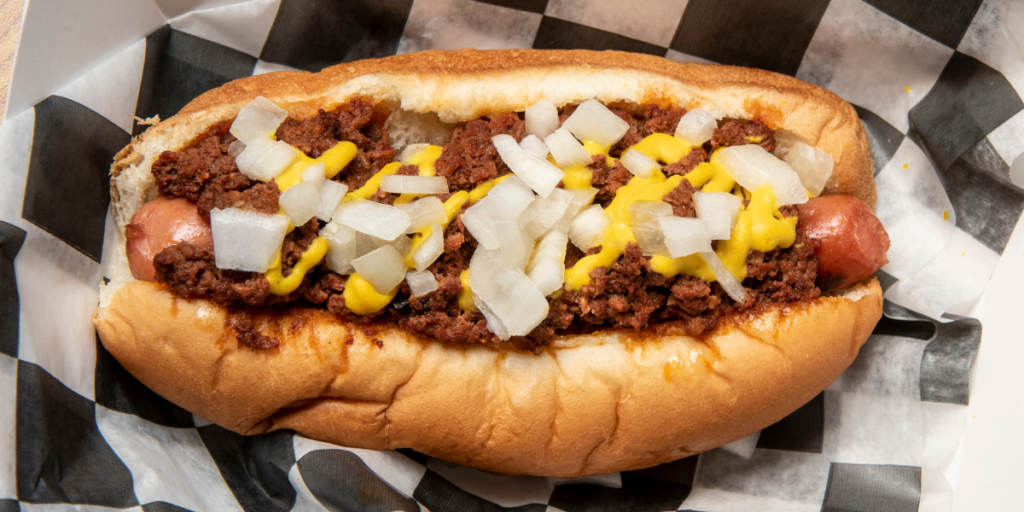
Detroit’s contribution to hotdog history comes with a side of friendly rivalry.
The Coney dog traces back to Greek and Macedonian immigrants who arrived in Detroit in the early 1900s and opened chili parlors. Two of the most famous, American Coney Island and Lafayette Coney Island, have sat side by side on Michigan Avenue since 1917, and Detroiters have been choosing sides ever since.
A proper Coney dog starts with a natural-casing beef and pork frank (the snap is essential) topped with a beanless beef heart chili sauce, a line of yellow mustard, and finely diced raw white onion. The chili isn’t thick like Texas chili; it’s a thinner, more savory sauce that soaks slightly into the bun and coats every bite.
The combination is deeply savory, a little funky in the best way, and completely addictive. Detroit will tell you it’s the best thing in the Midwest, and they’re not wrong.
→ Get the Detroit Coney Dog recipe
🌲 The Seattle Dog — Seattle, WA
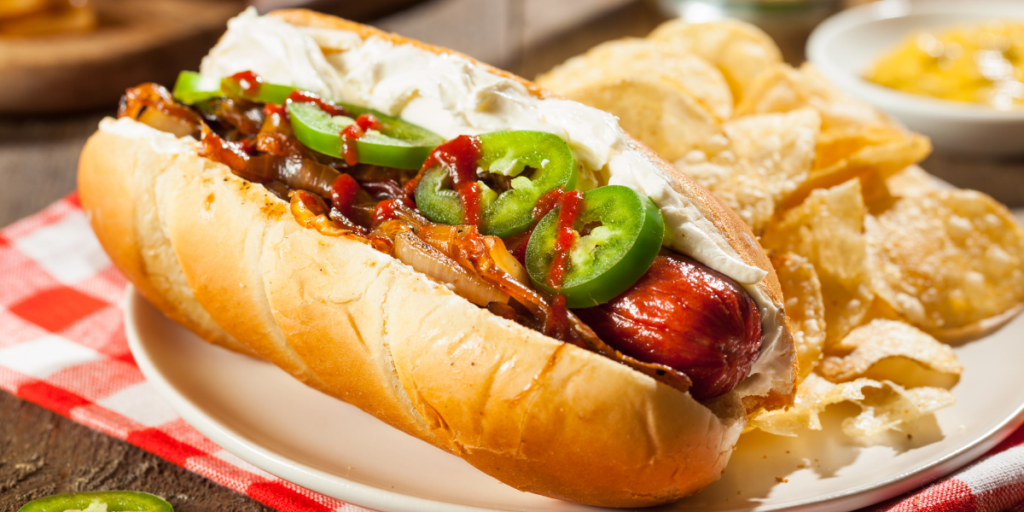
We end on the Pacific coast, where the hotdog took a turn nobody expected, and absolutely everyone should try.
The Seattle dog almost certainly originated in the late 1980s, born from the collision of two Pike Place Market staples: the hotdog cart and the bagel cart. The story goes that vendors started spreading cream cheese on buns as a way to keep them from getting soggy, discovered it was delicious, and never looked back. By the 1990s, Seattle dogs were a fixture outside bars and at late-night street carts across Capitol Hill and Belltown.
The build is simple and surprisingly elegant: a grilled frank in a soft bun, spread generously with cream cheese, topped with caramelized onions. Some vendors add jalapeños for heat, sauerkraut for tang, or sriracha for kick — but the cream cheese and onions are the soul of it. The richness of the cheese against the sweet, soft onions and the snap of the frank is one of those combinations that sounds odd until the first bite, and then makes complete sense.
It’s a Pacific Northwest creation through and through: a little unexpected, deeply satisfying, and better than it has any right to be.
The Right Tool for the Job
Six dogs. Six regions. One thing they all have in common: they taste better off a great grill.
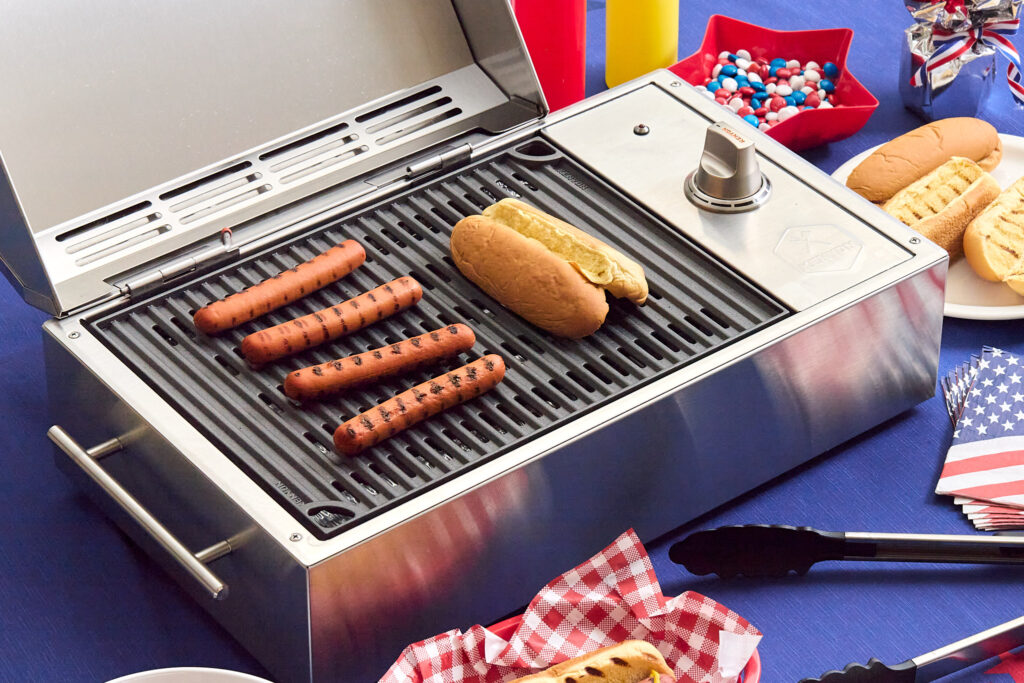
Whether you’re doing a slow caramelized onion situation for your Seattle dogs, crisping up bacon-wrapped Sonorans, or just getting the perfect char on a natural-casing Coney, the equipment matters. Kenyon grills are Engineered, Manufactured, and Assembled in the USA; Using Domestic and Foreign Parts — built to bring real grill flavor anywhere, without the flame.
A few reasons Kenyon is built for cookouts like this one:
- Flameless, electric heat. No propane, no charcoal, no open flame — just consistent, real grilling heat you can use on a balcony, patio, or anywhere a traditional grill isn’t allowed.
- Fast heat-up. Ready to cook in minutes, so you’re not waiting around while the dogs (or the chili, or the caramelized onions) wait on you.
- Built to last. American engineering and assembly behind every unit, designed for years of cookouts, not just one summer.
- Portable and built-in options. Whether you’re working with a small balcony or a full outdoor kitchen, there’s a Kenyon grill sized for it.
Shop Kenyon electric grills
Popular post
Uncategorized
Accessory Spotlight: Griddle